
Real estate finance gets difficult when the books do not match the project reality. Sales may look healthy, but cash can still tighten because customer instalments, contractor bills, land payments, markup, and tax deductions are all moving on different dates.
CBMC helps real estate businesses in Pakistan bring those moving parts into one reporting and cash-planning structure. As an accounting, tax, advisory, and technology-enabled professional services firm, we support developers, builders, owner-managed property businesses, project companies, and investor-backed groups that need clearer project-level control, stronger contract discipline, and reporting that owners, investors, and lenders can actually use.
CBMC real estate accounting for project-level control in Pakistan
CBMC structures real estate accounting around the project, phase, block, or entity that drives decisions. That gives you a clearer view of costs, collections, payables, financing, and margins at the level where commercial action is needed, not only in year-end financial statements.
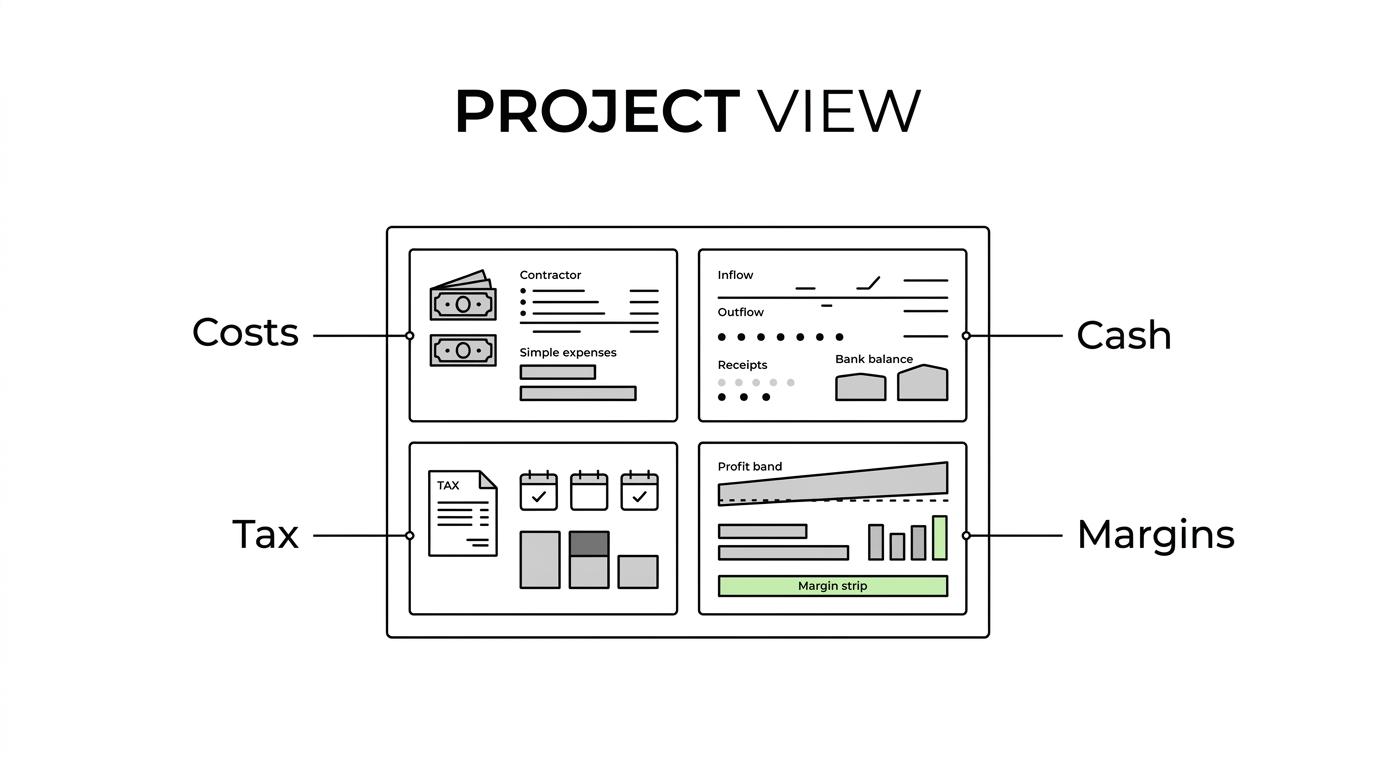
For construction and real estate clients, CBMC focuses on project accounting, commercial control, tax and compliance, and management reporting. Our management reporting support includes cash-flow forecasts, budget-versus-actual reports, project dashboards, and investor and lender reporting.
“CBMC supports real estate reporting with cash-flow forecasts, budget-versus-actual reports, project dashboards, and investor and lender reporting.”
That changes the value of the monthly close. Instead of waiting for a late trial balance, you get reporting that helps you spot overdue collections, committed payments, tax exposures, and the projects that need attention first.
CBMC can support your real estate finance function with practical deliverables such as:
- Project-coded bookkeeping by site, phase, SPV, or business unit
- Monthly and periodic management packs for owners, investors, or lenders
- Cash-flow forecasts linked to expected receipts, contractor claims, and funding needs
- Revenue recognition support tied to contract terms and delivery milestones
- Tax, compliance, and statutory coordination alongside routine accounting
Cash-flow planning for developers, builders, and property owners
Cash-flow planning in real estate is about timing as much as profitability. CBMC maps expected inflows and outflows across customer receipts, land and approval costs, contractor certificates, payroll, utilities, borrowing costs, and owner funding so you can see pressure points before they become emergencies.
CBMC also keeps the reporting basis disciplined. IAS 7 requires cash flows to be classified as operating, investing, or financing activities, and requires reconciliation of cash and cash equivalents with the statement of financial position, which helps you explain the difference between accounting profit, funding movements, and the actual bank position.
“CBMC plans real estate cash around operating, investing, and financing cash-flow classes under IAS 7.”
That classification matters when you are reporting to lenders, joint investors, or group stakeholders. It makes it easier to show how construction spend, borrowing, customer collections, and sponsor funding are affecting liquidity.
In Pakistan, a useful forecast also has to reflect tax timing. FBR publishes withholding-tax rate cards by tax year, and advance income tax on purchase and sale of immovable property can depend on fair market value and filer status, so CBMC builds cash planning around tax payment timing as well as project receipts and disbursements.
Revenue recognition and contract review for Pakistan real estate projects
Real estate revenue recognition depends on the contract, the promised deliverable, and when control transfers. Under IFRS 15, revenue is recognised when a performance obligation is satisfied, either over time or at a point in time, so CBMC reviews contract terms and reporting logic before numbers flow into management packs or year-end accounts.
That is especially important for developers selling units, plots, apartments, or houses, and for businesses combining development activity with construction obligations. IFRIC guidance on real estate agreements draws an important distinction between product sales normally recognised at delivery and construction services normally recognised as work progresses.
“CBMC applies IFRS 15, effective from 1 January 2018, to real estate revenue timing and contract review.”
CBMC turns that technical area into a practical control. We connect contract terms, billing schedules, milestone completions, and supporting documents so your finance team can defend why revenue was recorded in a given month, quarter, or handover cycle.
This also improves conversations with owners and investors. When revenue timing follows a documented basis rather than informal assumptions, period results become easier to understand and less vulnerable to rework later.
How CBMC delivers real estate accounting, tax coordination, and management reporting
CBMC usually starts with the finance questions that matter most to you right now: project profitability, cash pressure, reporting backlog, tax timing, lender reporting, or clean-up of books across multiple entities. From there, we define a scope that can include bookkeeping, CFO services, tax advisory, statutory filings, payroll support, outsourcing, or finance-process improvement.
Because CBMC works as one connected team across accounting, tax, corporate, advisory, and technology, you do not have to manage separate providers when a reporting issue also affects tax, approvals, contract interpretation, or systems. That reduces rework and helps site operations, finance, and compliance work from the same reporting logic.
A typical engagement is built around a few core steps:
- Review the current chart of accounts, project coding, contracts, reporting gaps, and tax-sensitive cash items
- Set up or refine project-based ledgers, reporting packs, and cash-flow forecast structure
- Establish a close timetable with budget-versus-actual reporting and management dashboards
- Support ongoing compliance, withholding-tax coordination, investor or lender reporting, and periodic finance review
CBMC can also align reporting design with ERP and business automation work where needed. That makes project data easier to capture, reduces spreadsheet dependency, and helps your team produce repeatable monthly reporting instead of rebuilding files each cycle.
When CBMC is the right fit for real estate businesses in Pakistan
CBMC is a good fit when you need more than routine bookkeeping. If you are managing multiple projects, SPVs, funding lines, or investor expectations, we help build a finance function that supports decisions during the project instead of explaining issues after the fact.
You are likely to get value quickly from CBMC if you need to:
- Clean up project books before investor, audit, or lender reporting
- Build monthly cash forecasts around sales collections, contractor payments, and tax timing
- Align revenue recognition with actual contract terms and control transfer
- Track withholding-tax exposure and statutory obligations alongside project cash
- Coordinate Pakistan reporting with stakeholders in the UAE or the UK
CBMC also suits growing owner-managed businesses and established groups that want practical improvement rather than a heavy, theoretical transformation exercise. Our services can scale from compliance support to broader finance modernisation as your portfolio and reporting needs grow.
Talk to CBMC about real estate accounting and cash-flow planning
If your current accounts do not explain where project cash is going, or if revenue, tax, and reporting timelines keep conflicting, CBMC can help you put a workable structure around the numbers. We can review your existing setup, identify the gaps in project-level control and cash planning, and outline the support needed for stronger monthly reporting, investor visibility, and compliance in Pakistan.
Share your project structure, reporting pain points, and current finance setup with CBMC, and we will help you define the next practical step.